"When we can look at the whole patient, it makes a big difference."
New Glasgow, N.S.
"When we can look at the whole patient, it makes a big difference."
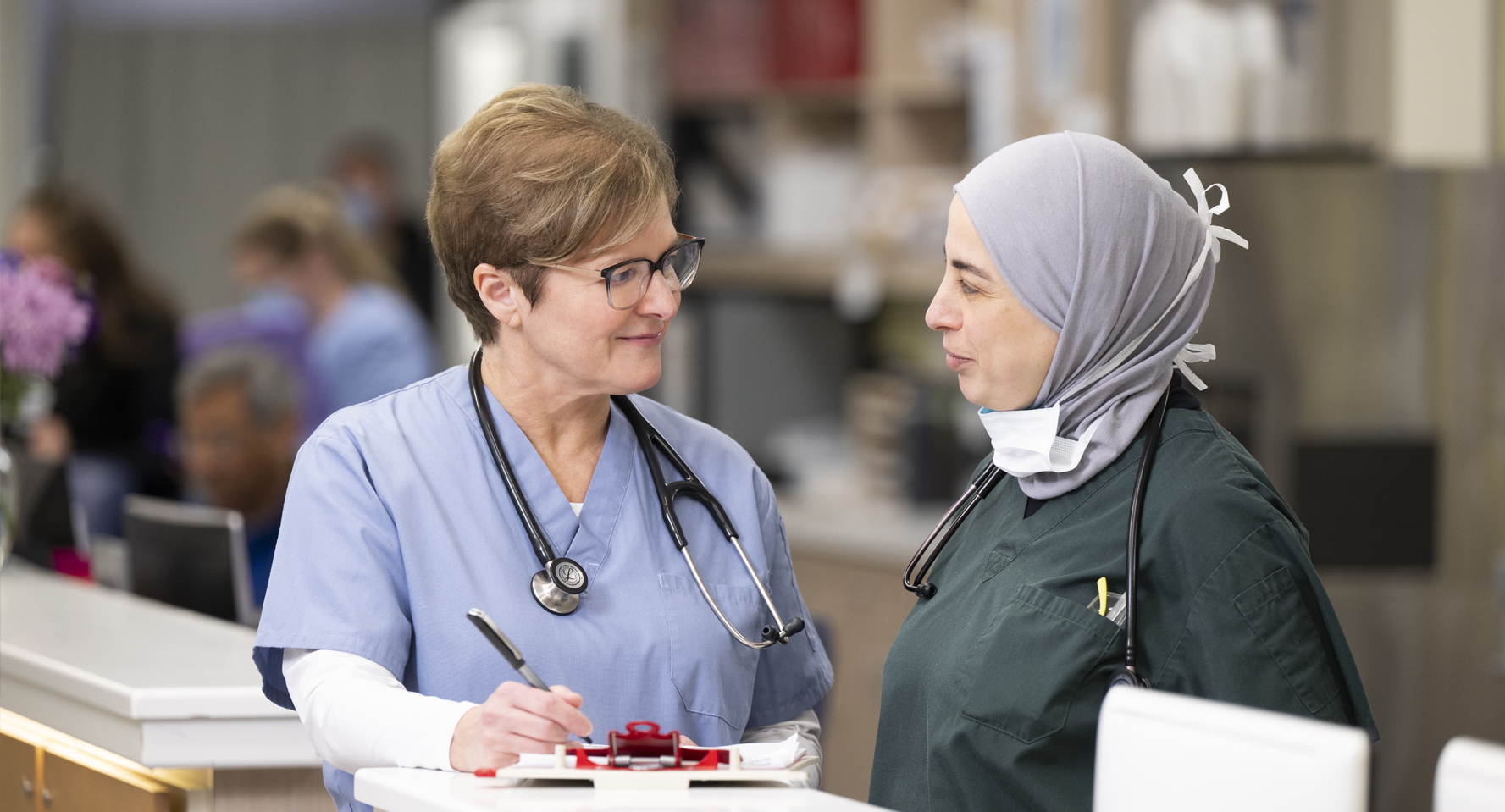
When Dr. Deborah Straub began practising medicine 30 years ago, she started as a family physician in a busy practice and also worked shifts in the emergency department.
Six months in, she knew family medicine wasn’t the right fit for her.
She loved helping the patients and her colleagues were supportive – but something was missing. “I went into a well-established practice with three male physicians who had been there 30 years and could see a ton of patients,” recalled Dr. Straub. “It was fee-for-service and I just couldn’t keep up.”
During her residency, she had studied both family medicine and emergency medicine – at that time, an emerging speciality in Canada. She grew to enjoy the adrenaline rush of the emergency department – the variety of patients, the array of health issues and the on-your-feet problem-solving it required.
“I love the patients – they’re so interesting and you see all walks of life. It’s busy, but I always have a few minutes to talk and listen to them.”
Realizing emergency medicine was what she wanted to do, she shifted gears. “After six months of family practice, I decided to just focus on emergency medicine and I’ve never regretted it. It’s been 30 years and I’m still enjoying it.”
Dr. Straub studied medicine at Dalhousie Medical School and completed residency training at Queen’s University in Ontario. Following residency and the birth of her first child, she was excited to return home to Nova Scotia. “I could not wait to move back home to New Glasgow.”
Since 1995, she has been a pillar of the emergency department at Aberdeen Hospital. “I love the staff here. They care about the patients and their community. It’s a real collaborative approach in our department.”
She relishes rural life. “I see patients at the store and that’s nice. I have four children and growing up, they’d say, “Mom, we can’t go anywhere without someone stopping you.” I think that’s great – that’s what a small town is like.”
Working in a community with high numbers of people without primary care means people coming through the doors often don’t have another option for healthcare. Sometimes, it’s been years since they’ve seen a provider.
“It’s heartbreaking to see people – often elderly people – with a chronic illness that hasn’t been managed. I try to get a deeper history to see what’s been going on.”
This can include ordering bloodwork or other tests. “We tend to do more than we probably should in the emergency department, but it’s the only contact the patient has had with a physician. In the long run, it’s better than just getting them out the door because they’ll be back again.”
Sometimes, a deeper look reveals a difficult diagnosis. “We diagnose a lot of cancers in the emergency department. It’s so sad to tell someone they have cancer. I’m sure if they’d had a healthcare provider, things would have been picked up a bit earlier. We then arrange biopsies so their care becomes all-inclusive. Once a patient gets in, things move for them.”
Referring patients to community resources has become key to her job. New Glasgow has a clinic to help people manage chronic illnesses like hypertension and diabetes, and an access clinic that provides primary care for unattached patients.
With more people struggling with the rising cost of housing and food, Dr. Straub is grateful to have a social worker on staff. “She can help people fill out forms, access medication and find a place to stay. There’s a lot more going on in their lives than just their medical complaints; when we can look at the whole patient, it makes a big difference.”
To help address the growing pressure on the healthcare system, it’s crucial to recruit and retain physicians in the area so patients can receive the care they need.
Dr. Straub credits a local community group called Healthy Pictou County for fostering relationships with prospective recruits and supporting the physicians already practising in the community.
“They have different activities every month – they’ll host a supper you can make at home with the Kilted Chef to get physicians socializing and having fun together. When a medical student or resident visits, they give them a gift with a Pictou County-branded Yeti [mug].”
Dr. Straub says making medical learners feel valued and helping them learn new skills is one of the best parts of her job. “I was working with a resident the other day and she was so excited because she got to do a procedure she hadn’t done before. It makes me happy that she’s doing something she likes and she’s learning. They get to do so much here.”
She also loves sharing her approach to patient-centred care. “I always tell them your patient is your primary focus. If you’re concerned about them, keep them overnight: watch them, check their vitals. You have to be able to leave your shift and feel like you’ve taken care of them.”
Though she’s been working for three decades in the emergency department, Dr. Straub says she has no plans to hang up her stethoscope. “People are starting to ask me when I’m going to retire and I’m like, no I’m not ready yet. I’m still enjoying it. Maybe if I’ll pick up a hobby I’ll be ready, but I don’t quite know what that is yet.”
“Medicine is very rewarding – the patients are the rewarding part. I love it and I always have.”