Want info and advice to help you live a healthier life?
Subscribe to our FREE bi-weekly newsletter and have the latest healthy living news, tips and advice sent to your inbox. Please note: We will not share your email address with third parties, and you will not receive spam email from us.
CLOSE ×
Our Blog
Advice to help you live your healthiest life, covering fitness, nutrition, mental health, self-care and much more.
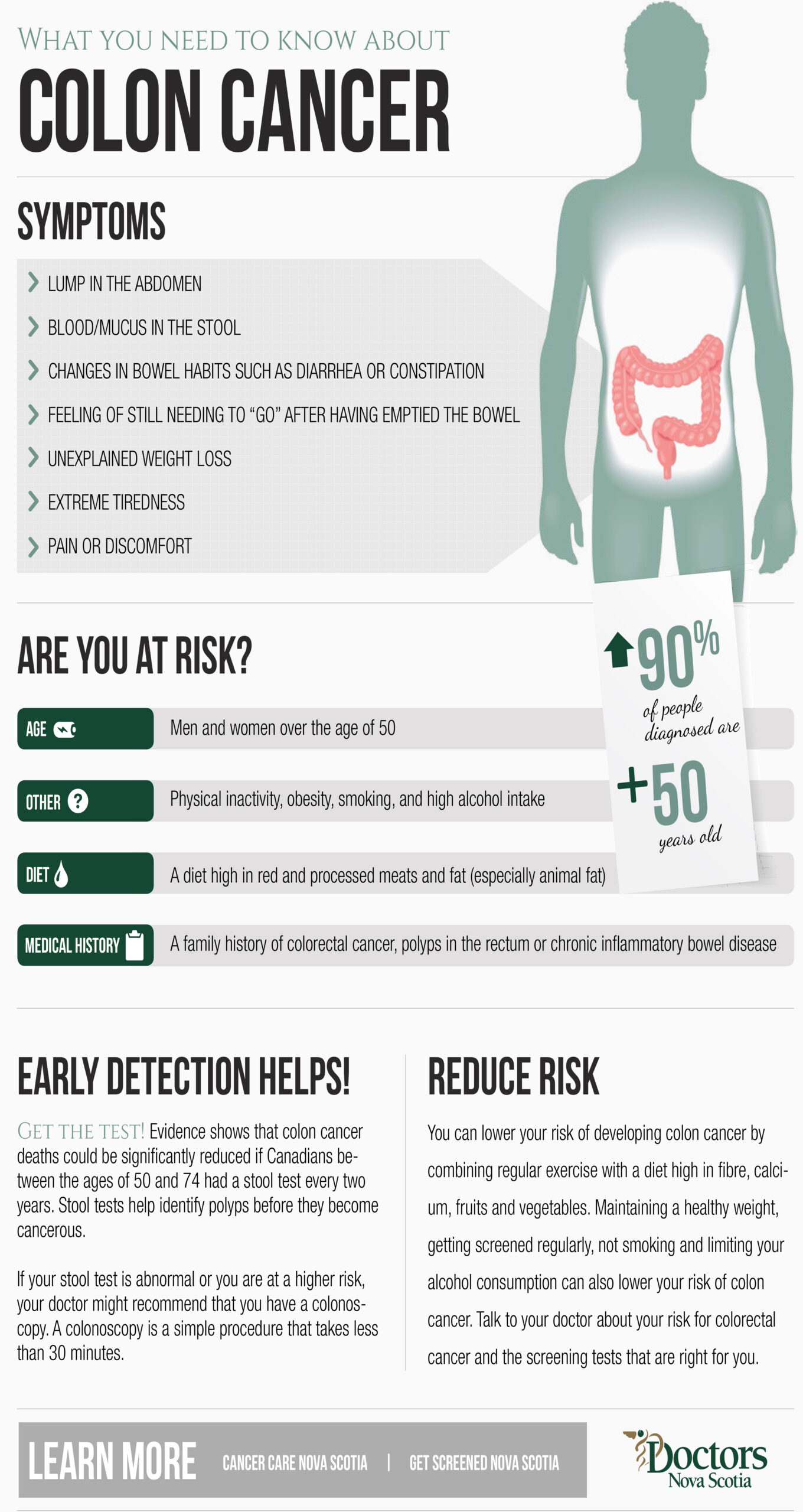
What you need to know about colon cancer [INFOGRAPHIC]
Mar 11, 2013
Share This:
In 2012 an estimated 22,500 Canadians were diagnosed with colorectal cancer and 9,100 died from it.
Colorectal cancer is the second leading cause of death from cancer both in Nova Scotia and nationally.
Also known as colon cancer, colorectal cancer is a disease in which malignant cells grow in the tissue of the colon or rectum, forming tumors. In Nova Scotia, approximately 1,000 men and women are diagnosed every year, and about 350 of them will die from the disease.
The good news is that colon cancer is one of the most highly treatable cancers if caught early. The Canadian Cancer Society reports that Canada has one of the best colorectal cancer survival rates in the world – slightly lower than the US, but better than most of Europe.
Despite the high treatability, most Canadians have not had a screening test and are confusedabout how and when it should happen. The key to surviving colon cancer is early detection.
One of the Truth and Reconciliation Commission’s 94 Calls to Action is to increase the number of Indigenous health-care providers, including doctors. Organizations such as the Canadian Medical Association and the Indigenous Physicians Association of Canada have called on medical schools…
As National Day for Truth and Reconciliation approaches, we’ve decided to dive deeper on the role that land acknowledgments play in reconciliation. At the start of a meeting or event, organizers will often make a formal statement recognizing the Indigenous peoples, lands and treaties connected to the…
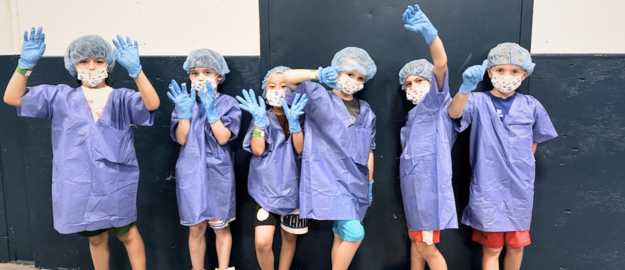
Teddy Bear Clinics ease the fear of medical appointments
This blog post was written by third-year Dalhousie medical student Miriam John. Going to the doctor can be nerve-racking, especially when you’re a little kid. But learning about healthcare procedures with your teddy bear can help transform nerve-racking healthcare experiences into positive ones.